How teams complicate analytics, SEO, CTA, and architecture — and why it often stuns growth.
Sites rarely “fall” due to one big mistake. More often they sink into hundreds of small but very energetic actions: we add, trace, complicate, expand... and we feel progress. And in fact — the conversion is stagnant, SEO is not going, releases are slowing down, the team is burning out.
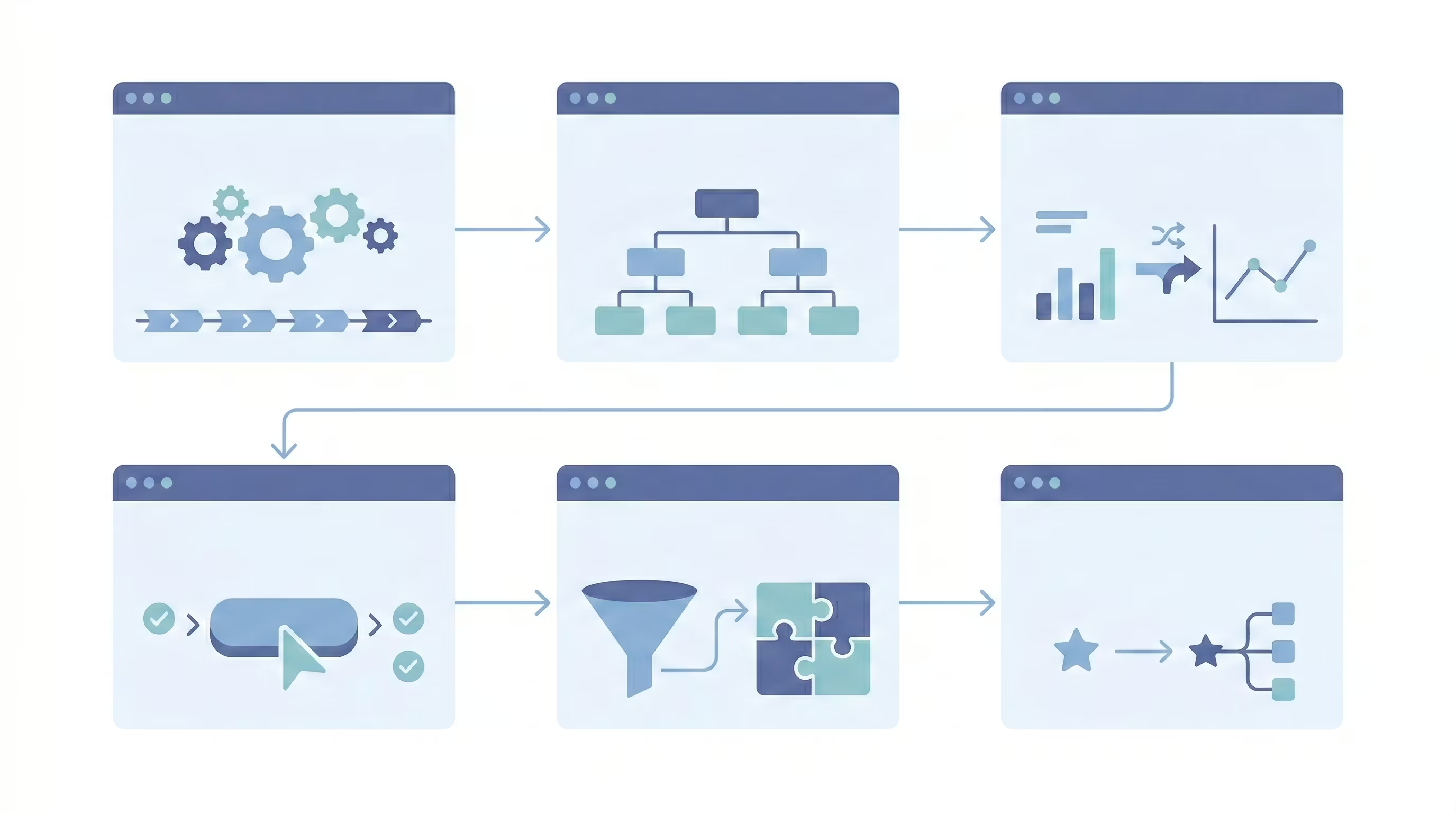
Below are 4 typical overthinking scenarios that I regularly see in marketing and growth sites. They all look like “work”, but all too often give exactly what is in the title: a lot of movement — little result. {{2rem}}
1) Analyst fetishes: “we are data-driven”, but decisions do not change
Imagine a kitchen in a restaurant that has decided to “become data-driven.”
They put sensors everywhere:
- How many times did the waiter open the refrigerator
- at what angle does the cook hold the knife
- how many seconds did the guest look at the “desserts” section
- how many times the menu was touched
- and 200 more parameters “just in case”
Data is the sea.
And in the kitchen there is still chaos: dishes come out for a long time, the return of guests does not grow, profit does not please.
Because no one answered a simple question: what decision will we make thanks to these figures?
Sites are often the same.
We track 100500 events, look at heatmaps, pass into the form a bunch of hidden-parameters... and in the end we can't say exactly what we're changing tomorrow.
My filter here is as boring as possible, but it saves:
each metric should answer the question “what decision does it change?”
If the answer is not obvious, it is not analytics. This is collecting. {{2rem}}
Minimal enough for most marketing sites
- 3—5 decisionsthat you take regularly
- 1—2 Metricsfor every decision
- 7—10 Key EventsMaximum
- simple chain: CTA click → form submit → qualified lead
Most restaurants don't need to know how many times a guest has winked.
2-3 things are useful to them that directly affect profits:
- how many guests return (retention)
- average check
- how much does the table “sit” from landing to payment (table turnover/service speed){{2rem}}
2) SEO-quantity instead of system: “we stamp articles”, and the effect is small
The easiest way to “do SEO” is to start stamping articles.
A lot. Regularly. About everything in a row.
On paper, it looks beautiful: “we develop content.”
And in reality, it is often like a restaurant, which instead of the normal menu adds 3 new dishes every day.
The kitchen is boiling.
The menu is getting thicker.
And the profit is somehow not so much.
Beaux “more dishes” ≠ “best restaurant”. SEO is often the same.
The team works on the principle: “write as much as possible.”
More Articles. More pages. More keywords. More “just in case.”
And it looks like work is going on. And then it turns out that:
- Google doesn't understand what's most important to you
- Pages compete with each other
- internal links random
- content is not collected in the system
- and each new article adds almost nothing
Briefly: a lot of movement, little result. Sometimes it even hurts. {{2rem}}
What works better
Sounds less “heroic”, but gives the effect:
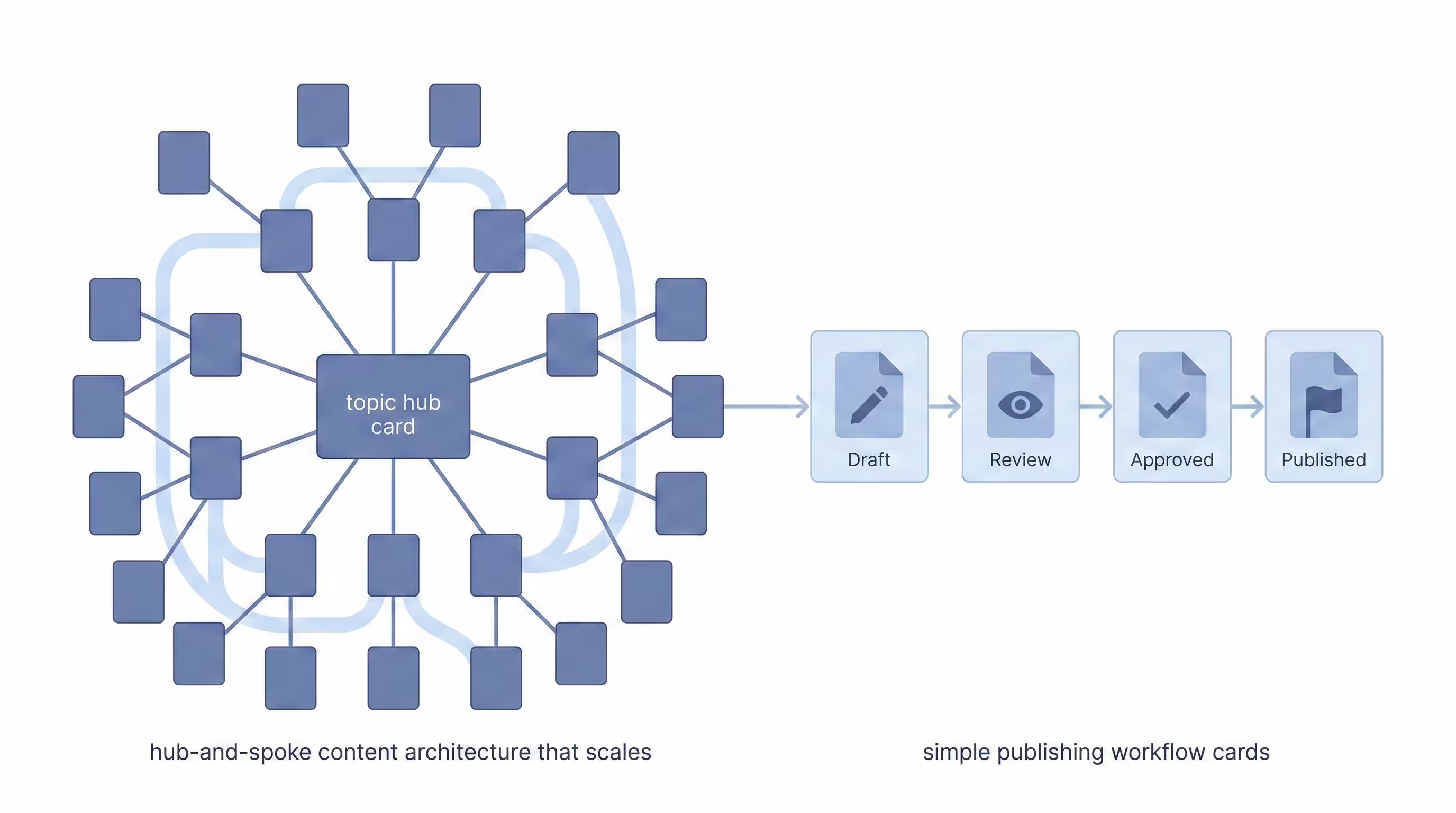
- originally structure(taxonomy: topics/clusters/intents)
- then hubs(1 page support on the topic)
- then Subpagesthat strengthen the hub
- and internal linkagewhich is not accidental, but conceived
In the restaurant analogy:
- first you define “what we cook best”,
- and then build around that menu.
Not the other way around.
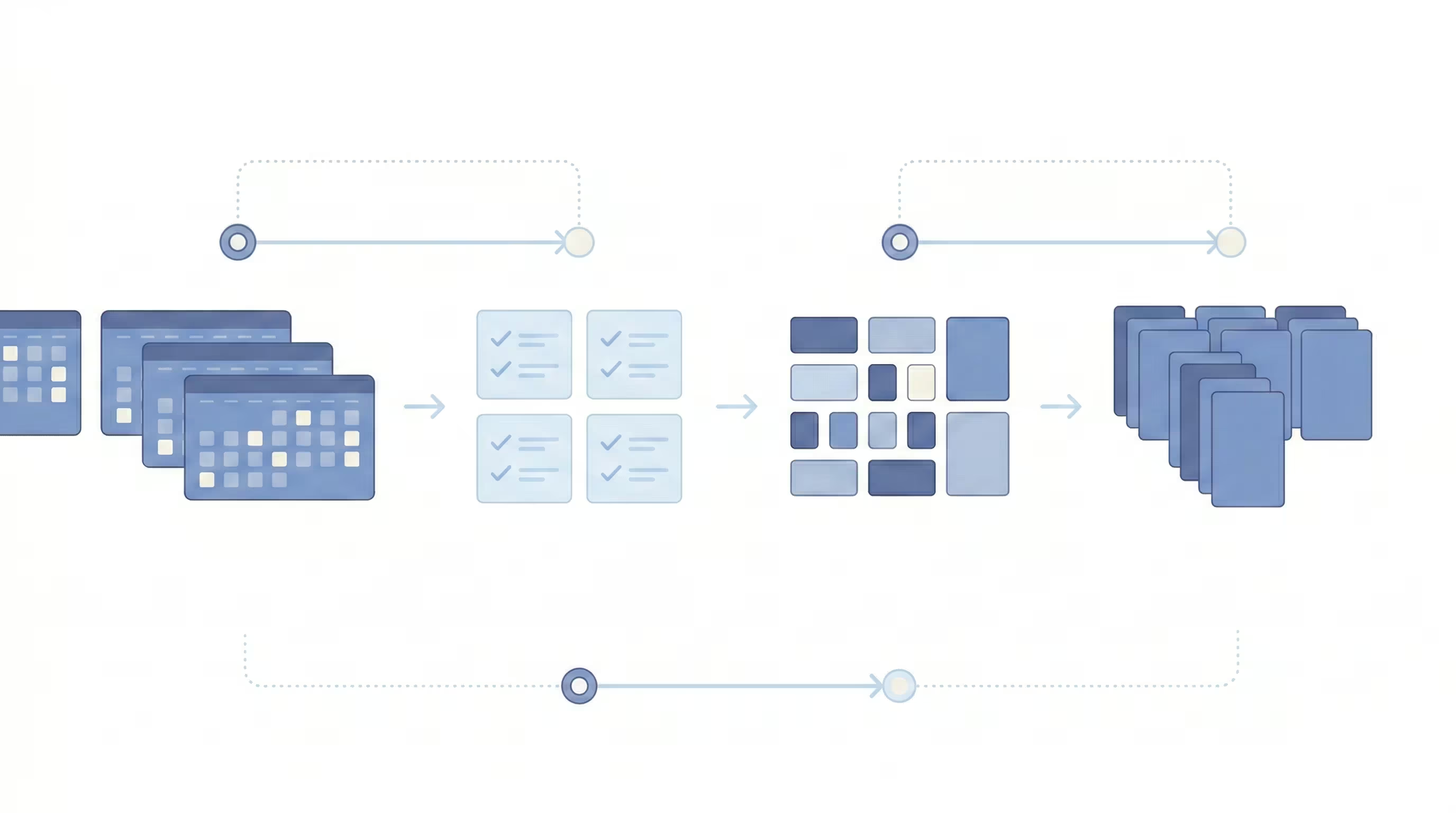
3) CTA Chaos: when the site starts begging the user
A sign that you're losing conversions: your site is starting pleadof the user.
CTA on top.
CTA in the middle.
CTA from below.
Popap “book a demo”.
Another pop “sign up”.
Form on every second page.
And all this at the same time.
At some point, the team runs out of confidence — and CTA chaos begins.
The logic is simple and very human:
“the more we ask, the more converts.”
The problem is that you have seduce, not learn.
The site is not a market where the one who shouts louder wins.
It's more like a restaurant where the waiter comes in every 30 seconds and asks:
“Well, are we already ordering? And now? And now?”
Formally, it “pushes for conversion.”
In fact, it spoils the experience and reduces the chance that the guest will return. {{2rem}}
What works better (and easier than it seems)
- 1 main next stepfor the page — for people with high intentions
(Book a Demo/Request Pricing) - 1 spare next step— for those who are still researching and are not ready to talk to sales
(checklist, guide, case study, newsletter) - Intensity Logic:
the colder the traffic — the lower the threshold of action (first the value → then the conversation);
the warmer — the more direct the CTA can work
In the restaurant analogy:
- the main thing is to build the process so that the guest calmly gets acquainted with the menu, makes a decision and gets a quality experience
- and “order?” should appear when the person is ready, not when you are nervous {{2rem}}
4) Premature overengineering: building “like for an enterprise” earlier than necessary
The fastest way to lose mobility is to start building “for the future” before that future has arrived.
The owner of the barbecue does not fit into the equipment for molecular cuisine.
And it does not hire a fermentation chef or a gastrochemist “just in case” until there are dishes and processes that really need it.
It's the same with sites. It is called premature overengineering.
When a site begins to be built “as for an enterprise”, although businesses now need quick tests:
- 12 types of content in CMS
- 6 levels of navigation
- complex filters “for the future”
- integration “just in case”
- roles, permissions, approval flow
- a little more “versatility” — and it will be perfect
And then the reality:
- the first normal page comes out in weeks
- any modification becomes expensive
- marketing is afraid to touch the site
- releases disappear
- The pace of experimentation is falling
- development cost — “to the moon”
Briefly: a lot of movement, little result. Sometimes it even hurts because you fix the wrong architecture too early. {{2rem}}
“Minimal Enough” for Most Growth Teams
- 2—3 key templatesPages (campaigns/product/cases)
- 3—5 types of contentin CMS (not 12)
- a simple taxonomy that can really be maintained
- component system so that the releases do not break
- minimal analytics for solutions (not for “interesting”)
Everything else is added when:
- there is a stable rhythm of releases
- There is a clear impact
- there is a real need (not the fear of “then it will be too late”)
Summary: what was talked about
This series is about one pattern: we compensate for uncertainty with complexity.
When there is no clear focus, you want to “customize more of everything” — metrics, pages, CTA, functionality. This creates a sense of control, but often kills pace and clarity.
We have analyzed 4 forms of overthinking:
- analytics-fetishes— a lot of tracking, few decisions
- SEO-quantity— a lot of content, little system
- CTA Chaos— a lot of “ask”, little clear next step
- premature overengineering— a lot “for the future”, little speed now {{2rem}}
Conclusions (briefly and in practice)
How to reduce the hustle and bustle and raise the result:
- Metric has the right to life only if it changes the decision.
- SEO starts with structure, not content flow.
- There should be one main step on the page and one spare — not ten.
- Architecture should maintain the pace of releases, not fantasies of “then”.
- “Minimum Enough” is not poverty. This is speed and handling.
This is a separate block that needs to be inserted into the case study frame (we have such a thought out for articles. There is a field text for this item - a specific placeholder) It must be inserted closer to the end of the article. Just before Results {{2rem}}
How we at Ambi approach growth infrastructure on Webflow (without overthinking)
We are building a growth infrastructure as an antidote to “a lot of movement, little result”. That is, we do not add complexity “for the sake”, but we assemble a system that keeps up the pace of releasesand does not crumble from each edit.
1) We start with the rhythm of the releases, not with the features
The first KPI is whether the team will be able to release changes regularly (weekly/every 2 weeks) without fear. Therefore, we immediately lay down an understandable structure, components and rules that do not allow to slide into chaos.
2) “Minimally sufficient” CMS instead of “enterprise for the future”
Instead of 10-12 “just in case” collections — usually 3—5 types of content, simple taxonomy and clear logic: what is a hub, reinforcing a hub, how it is cross-linked. The goal is that marketing can manage the content itself and not break the system.
3) Analytics only for decisions
We don't track “everything we can”. We leave the minimum that answers to: what do we change with the next release?
Usually these are 7—10 key events and a simple chain: CTA click → form submit → qualified lead.
4) CTA discipline instead of CTA chaos
On the page: 1 main next step(for high intent) + 1 spare(for those who are still warming up). We adjust the intensity of the CTA to the “heat” of the traffic. This is a rule of the system, not a wish — otherwise chaos returns very quickly.
5) Integration — after the funnel, not instead of it
First, we coordinate the funnel and the definition of the lead, collect the minimum necessary data — and only then connect CRM/email/automations (Make, n8n, etc.). So integrations enhance the process, rather than create new breakpoints.
6) Difficulty is added only when it is “bought” by the result
Filters, roles, approval, additional collections — only when there is a stable release rate and a clear impact. Otherwise, it is premature overengineering.
Briefly:growth infrastructure on Webflow for us is a system where the team quickly makes changes, measures only what affects the decision, and does not slide into analytics/SEO/CTA/architecture chaos.