Website creation - is a comprehensive process that includes design development, code writing, strategic planning, and content filling.
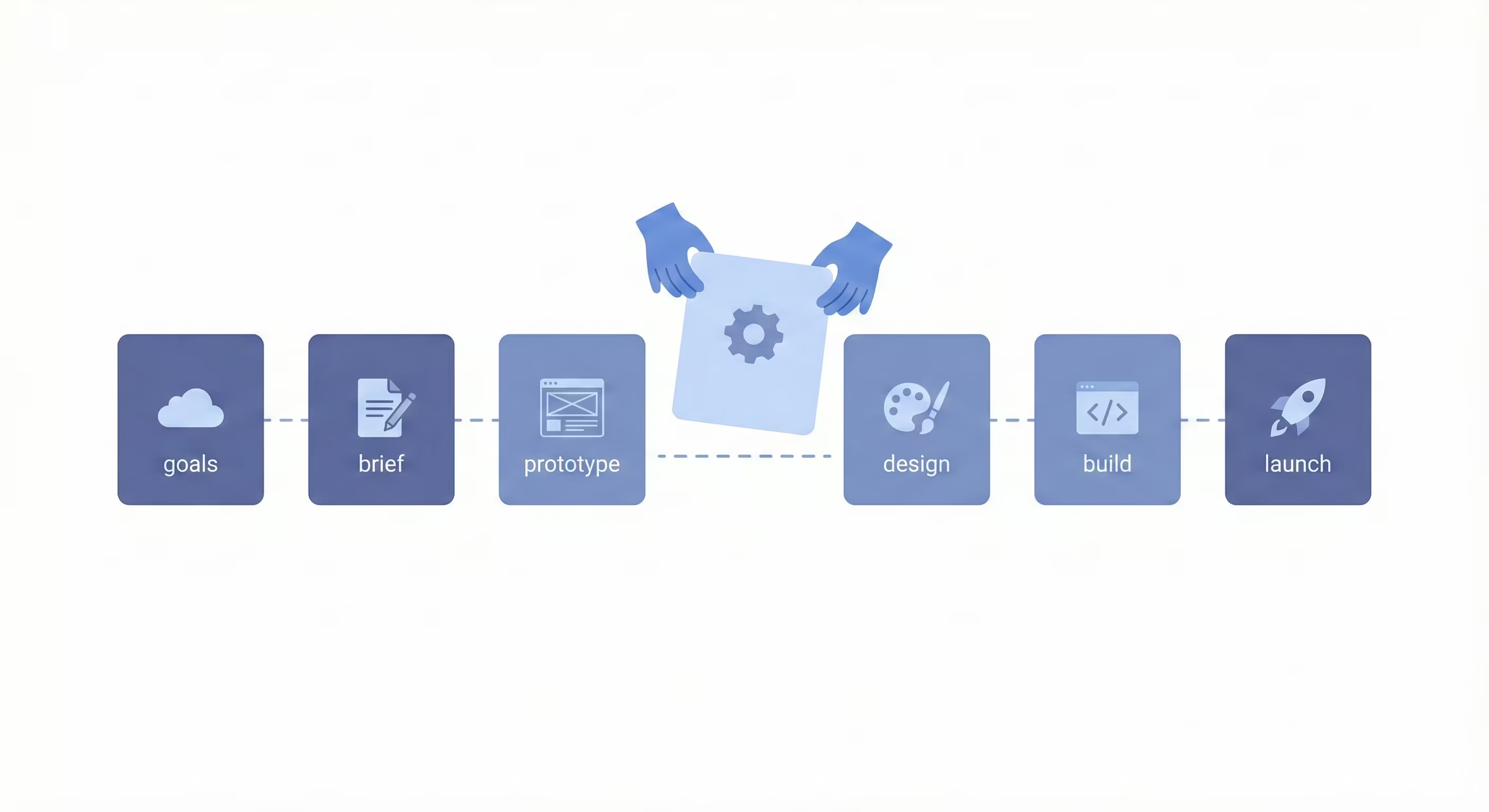
For a platform to be effective and perform its function—informing, selling, or promoting a brand—it is important from the very beginning to understand the goal and correctly build each stage. Therefore, it is necessary to consistently review all steps—from task definition and prototype creation to launch, testing, and support.{{2rem}}
Defining website goals
Website development begins with defining its goals. This may be selling products, presenting a company, attracting potential clients, or providing informational services. A specific goal influences all subsequent decisions: from page structure to the choice of CMS, design style, and functional modules.
When goals are clearly formulated, it is easier to understand what the content should be like, which logic of section structure to choose, and which technical resources will be required. For example, for an online store, a convenient cart and payment system will be critical, while for a blog—simple article management and navigation. It is precisely a clear goal that helps achieve the desired result and move on to other stages.{{2rem}}
Forming the technical specification
All stages of website creation are impossible without a clear and well-prepared technical specification (TS). It contains a precise description of what exactly must be implemented: which pages are needed, how navigation will work, which functions the website should perform, and what type of content is planned.
A properly prepared technical specification takes into account general aspects (platform type, language, responsiveness) as well as details: types of forms, integrations with CRM or payment systems, requirements for loading speed. A well-formed TS allows the team to act cohesively and achieve a predictable result without unnecessary revisions. This document turns all stages of website creation into a well-thought-out action plan, minimizes possible errors, and prevents misunderstandings.{{2rem}}
Developing the website structure and prototype
The main stages of website creation include developing the structure and prototype. It is at this stage that the portal logic is formed: how the user will interact with its sections, how they will find the necessary information, and how quickly they will be able to perform the target action.
First, the platform structure is created—a scheme of pages and their hierarchy. The next stages of website development include creating a prototype. This is a simplified graphic representation of the future platform without design. However, the prototype is very important, as it allows visualization of the following aspects:
- main sections and subsections;
- placement of key blocks on pages;
- user action scenarios (navigation, clicks, transitions);
- interaction points (forms, buttons, cart).
This is an important intermediate result that makes it possible to check usability and logic even before website development starts.
Interface design
The sequence of website development stages includes interface design. And this is not about beauty, but about user convenience. Design is the visual layout of pages taking into account the logic developed in the prototype. The designer works on colors, fonts, buttons, icons, and the placement of elements.
Modern website design development assumes that the interface must be responsive—that is, look and work equally well on smartphones, tablets, and computers. The design takes into account the company’s brand style, color psychology, navigation convenience, and contrast for readability.{{2rem}}
Layout and programming
After the design is approved, the technical implementation of the website begins. This step includes layout and programming—the key processes on which the stages of website creation are based. Layout involves transforming the graphic mockup into HTML/CSS code. Thanks to this, the platform is displayed correctly on different devices and browsers, maintains responsiveness, and visual integrity.
Programming ensures the operation of all dynamic elements. In particular, this includes:
- creation of interactive blocks and forms;
- configuration of user interaction logic;
- connection of CMS and third-party services;
- ensuring security and performance.
This stage makes the website not only visually attractive but also functional, ready for content filling and further testing.{{2rem}}
Front-end development
Front-end development is the creation of the part of the website that the user sees and interacts with. It includes design implementation, layout, as well as the configuration of interactive elements such as menus, buttons, forms, and animations. The developer works with HTML, CSS, and JavaScript to ensure correct display of pages on different devices and browsers.{{2rem}}
Back-end development
Back-end development is responsible for all the “internal mechanics” of the platform—data processing, database work, authorization logic, order processing, and sending emails. This layer ensures the functioning of the CMS, integration with payment systems, analytics services, and other modules. Without a high-quality back end, websites cannot perform business functions.
Website development on Webflow
In our projects, instead of the classic combination of front-end and back-end, we use the Webflow platform. It allows implementing design, responsive layout, CMS, and animations in a single environment without complex programming. Webflow significantly simplifies the development process: the website launches faster, is easier to maintain, and does not require a separate server or constant technical updates. The client receives a convenient content management system, high performance, security, and the ability to update the website independently without involving developers.{{2rem}}
Filling the website with content
The main stages of website creation include not only technical development but also detailed content filling. This is what turns a template or structure into a full-fledged web resource that is understandable and useful for the user. During the content publication process, it is important to:
- place high-quality, unique texts with SEO in mind;
- use optimized images and videos;
- implement correct headings, subheadings, and meta tags;
- check the logic of page structure and internal links.
Content must correspond to the goals of the platform, be easy to read, and work well for search engines and users. Keep in mind that relevant content directly affects audience engagement and retention.{{2rem}}
Website testing
Website testing is one of the most important stages before launch. It helps ensure that the resource works stably, is displayed correctly on different devices, and does not contain critical errors.
During testing, the operation of all functions is evaluated: form submission, request processing, user registration, search, and navigation. The site’s responsiveness, speed, and compatibility with different browsers are also examined.
Special attention is paid to security. The presence of an SSL certificate, protection of personal data, and the absence of vulnerabilities in login or administration forms are checked. Testing helps identify and eliminate weak points so that the website launches without issues.{{2rem}}
Website launch
Launch is the final point in the website creation process and at the same time the beginning of its real life on the internet. After all checks, settings, and fixes, the project is moved to the main domain and becomes available to visitors.
During this period, developers transfer the site from the testing environment to the main server. Final server software configuration is performed, and the correctness of database connections, email, and external services is checked.
It is also important to take care of analytics launch: connect Google Analytics, Google Search Console, or other tools for traffic tracking. This makes it possible to see user behavior from the first day and respond in time to possible technical or content issues.{{2rem}}
Support and development
The process does not end with the launch. After that, the project requires regular support and gradual development.
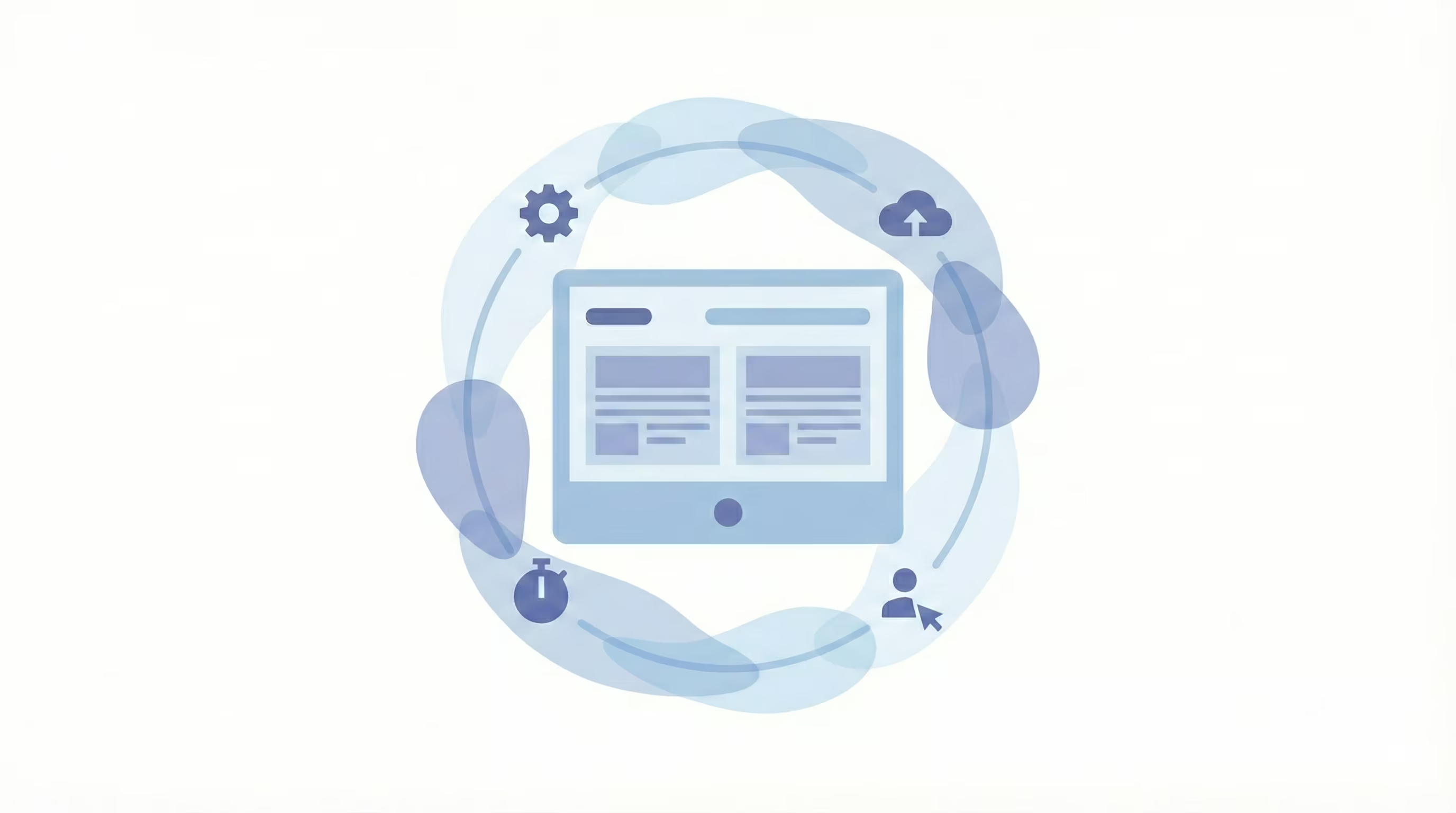
CMS and plugin updates, backups, technical monitoring, fixing possible errors, and adaptation to new user requirements remain important.
Content also needs to be updated, new features added, speed improved, and UX optimized. Without quality support, even a well-built website will quickly become outdated, lose search positions, and audience interest.{{2rem}}
How to avoid common mistakes when creating a website
Website creation is often accompanied by mistakes—even experienced developers make them. To save time, budget, and nerves, it is important to know the most common problems and consider them in advance:
- Lack of a clear technical specification. Without specific requirements, the team works blindly, which leads to constant revisions and delays.
- Neglect of mobile adaptation. Most traffic today comes from mobile devices. If a site is inconvenient to open on a phone, users will simply find another platform.
- Overly complex structure. Confusing navigation, overloaded menus, and unclear categories repel visitors and harm SEO.
- Lack of SEO optimization at the start. Without basic optimization (tags, speed, sitemap), a new resource will not get good search rankings.
- Saving on testing. An untested site may contain critical errors that spoil the impression and reduce trust in the brand.
- Choosing a platform without considering needs. The CMS should be selected according to the project’s goals. For example, a blog and an online store have very different functional requirements.{{3rem}}
How to choose a reliable development team
It is optimal to choose a team with real experience and transparent workflows. Check the portfolio: are there websites similar to yours in type or functionality. Reliable developers clearly explain how each stage of work takes place—from technical specification to testing and support. Be sure to find out who is on the team (designers, programmers, content managers) and who will be responsible for communication.
Pay special attention to reviews and cases. If a company has long-term projects with regular clients, this is a good sign. Analyze what questions developers ask you at the start, how they assess project complexity, and what timelines they name. A team that asks the right questions and focuses on results rather than formal task execution is your candidate.{{2rem}}
The most popular types of websites
The type of website determines not only its appearance but also technical complexity, navigation logic, content requirements, and business goals. It is important to understand the difference between the most common formats before starting development.{{2rem}}
Corporate website
This is the main digital tool for a company. It contains key information about the business: areas of activity, services, partners, contact details. Multi-level structure, responsive layout, CRM integration, and feedback forms are important here. Although work on such a site is more complex than developing a landing page, such a platform works for brand trust and improves communication with clients.{{2rem}}
Landing page
This one-page website focuses on one specific action: selling a product, collecting requests, or subscriptions. Therefore, landing page development is ideal for advertising campaigns, new product launches, and demand testing. For results, clear positioning, competent copy, and a convenient block structure are important.{{2rem}}
Blog
A blog can be used both for a personal brand and for business promotion. The main requirements for such a website are ease of updates, a convenient category system, and fast page loading. It is also important to have SEO optimization configured to attract organic traffic.{{2rem}}
Brand / image projects
These are non-standard websites created to form a strong visual impression. They often use animation, parallax effects, and unique design solutions.{{2rem}}
Online store
An online store is a complex platform for selling goods online. Key elements include a product catalog, order system, inventory management, integration with payment services and logistics. A successful e-commerce website must have fast navigation, filters, mobile adaptation, and a high level of security.{{2rem}}
How Ambi will simplify your path to the goal
Ambi specializes in developing modern platforms focused on business tasks. Thanks to a deep understanding of client needs and a comprehensive approach to project implementation, the Ambi team helps go through all stages of website development — from idea formation to launch.
Unlike template solutions, Ambi focuses on solving specific business problems: optimizing funnels, improving user interaction structure, eliminating barriers to content perception. All projects are created based on analytics, testing, and experience in real niches. They also take into account CMS specifics, design, and the technical environment, including hosting.{{2rem}}
Conclusions
Website creation is a multi-level process that begins with goal analysis and ends with support of an already launched resource. Each stage, from technical specification to testing, critically affects the final result.
To get a truly high-quality product, it is worth acting consistently, choosing a proven team, and not saving on key things: structure, content, hosting, security. It is the systematic approach, analytics, and attention to detail that help create a website that works for business goals and builds audience trust.{{2rem}}
FAQ
How long does it take to create a website from scratch?
The duration depends on the scale — a simple business card website can be launched in a few days or a week. A platform with individual design, complex logic, and integrations requires from several weeks to several months.{{2rem}}
How much does website creation cost and what does the price depend on?
The cost is formed from several components: design, software implementation, content, integrations, support. A basic website with a standard template and minimal functionality will be significantly cheaper than a full-featured project with custom design, multilingual support, and integration with payment systems.{{2rem}}
What modern technologies are used for web development?
In web development, the frontend is usually based on HTML5, CSS3, and JavaScript with frameworks such as React or Vue. For the backend, PHP, Node.js, or Python are chosen. Content is managed via CMS such as WordPress or Drupal or via headless solutions. Data storage uses MySQL, PostgreSQL, or NoSQL.